France's 2026 e-invoicing mandate: is your bakery ready?
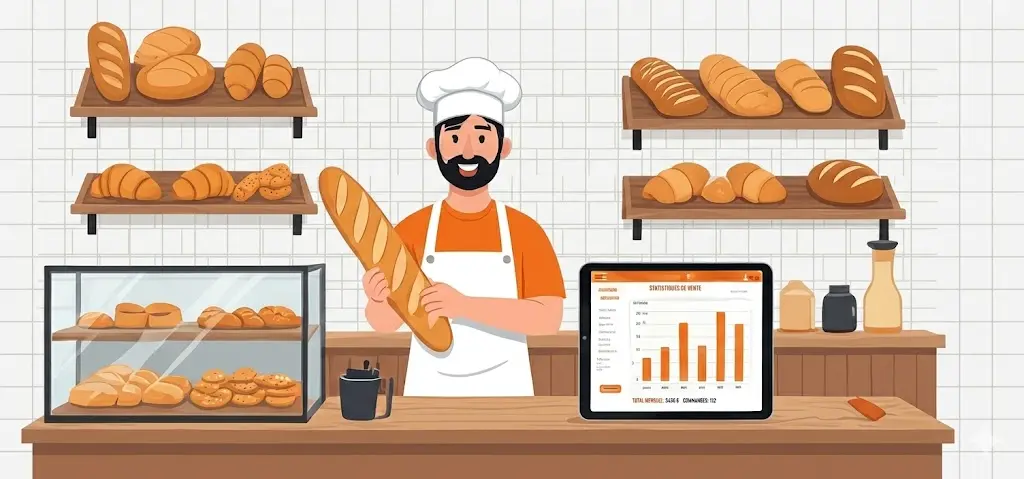
From September 1, 2026, every VAT-registered bakery in France must be able to receive electronic invoices through an accredited platform (Plateforme Agréée), even if it only sells to walk-in customers. Issuing e-invoices to business clients follows a year later, on September 1, 2027, and counter sales fall under e-reporting, an automated transmission of aggregated sales data to the French tax administration. Nobody is exempt, not even micro-businesses under the VAT franchise scheme.
The reform was postponed twice, so plenty of artisans filed it away as one more administrative project that would never land. Wrong: the timeline is now written into the finance law, and <a href="https://entreprendre.service-public.gouv.fr/actualites/A15683" target="_blank" rel="noopener noreferrer">the official calendar published by the French administration</a> includes no further delay. Three months from the deadline, the question is no longer whether your bakery is in scope, but what's left for you to do.
The topic feels far removed from the oven, yet it touches three very concrete parts of your day: the invoices from your flour mill, the ones you send to restaurants or local authorities, and the receipt for every baguette sold. Here is how the reform applies to a bakery, what it costs, and in what order to prepare.
Why 2026 is the year everything changes
The principle fits in one sentence: invoices between French businesses will no longer travel freely by email or post; they will pass through accredited platforms that forward the data to the French tax authority (DGFiP). A PDF sent by email will no longer count as a valid invoice between businesses. The expected format is structured, most often Factur-X: a regular PDF carrying a machine-readable data file inside.
The rollout happens in two stages. On September 1, 2026, every business must be able to receive electronic invoices, and large companies start issuing them. On September 1, 2027, issuing becomes mandatory for small and medium businesses, which means virtually every bakery. According to <a href="https://www.impots.gouv.fr/depliant-la-facturation-electronique-en-4-questions" target="_blank" rel="noopener noreferrer">impots.gouv.fr (in French)</a>, the reform applies to all businesses "regardless of size, revenue, or legal form", including sole traders and micro-entrepreneurs. The VAT franchise doesn't shield you: a bakery run as a micro-business still has to designate its platform.
For an artisan, the September 2026 reception obligation is the part everyone underestimates. It lands a year before the rest, and it doesn't ask for much: register with an accredited platform and tell your suppliers. If your management still lives in binders and a cash notebook, this is one more reason to <a href="/blog/notebook-to-digital">move from paper to digital</a> before the deadline forces the issue.
Three flows to keep straight in your bakehouse
First flow: the invoices you receive. Flour mill, packaging supplier, electricity contract, oven maintenance... from September 2026, these invoices will arrive electronically through your suppliers' platforms. Without a designated platform on your side, you simply won't receive them anymore, which means reminders, late-payment penalties, and supplier relationships under strain.
Second flow: the invoices you issue to other businesses. Restaurants, cafés, works councils, town halls for the school canteen, bread depots: if you bill other organizations, those invoices must go out in structured format from September 2027. The required fields grow at the same time: the client's SIREN number, the delivery address when it differs from the billing address, the nature of the transaction. All details your invoicing software should fill in automatically, unless you fancy spending your evenings on it.
Third flow, and the least understood: your sales to consumers. You won't send an electronic invoice for every croissant. These sales fall under e-reporting: aggregated amounts, per day and per VAT rate, transmitted to your accredited platform, which relays them to the administration. In a bakery, this flow runs almost entirely through the POS software. <a href="https://www.francenum.gouv.fr/guides-et-conseils/pilotage-de-lentreprise/dematerialisation-des-documents/facturation-1" target="_blank" rel="noopener noreferrer">France Num's e-reporting guide (in French)</a> points out that POS vendors don't all handle this the same way: some generate the file themselves, others hand everything to the platform. That's the question to put to your vendor before summer. And since this data feeds the tax administration continuously, your POS and your books had better tell the same story — one more reason to <a href="/blog/calculate-real-margins">calculate your real margins</a> on clean numbers.
Your checklist for the next three months
Start by choosing your accredited e-invoicing platform. The official list is published and updated on impots.gouv.fr; there were <a href="https://compafacturation.com/faq-facturation-electronique-artisan" target="_blank" rel="noopener noreferrer">close to 150 platforms registered or under audit in early June 2026</a>. Three criteria do the sorting for a bakery: compatibility with your POS and management software, e-reporting included in the base subscription, and price. Offers aimed at small businesses run from <a href="https://sk-web.fr/article/facturation-electronique-obligatoire-tpe-artisan-2026" target="_blank" rel="noopener noreferrer">free to about €30 (≈ $32) per month</a>.
Then question your software vendors. Your POS, your invoicing tool, and your accountant each play a part in the chain. Two questions are enough: "will you be connected to an accredited platform, and which one?" and "will the e-reporting of my counter sales be automatic?". A vague answer is a signal. Our comparison of <a href="/blog/meilleur-logiciel-boulangerie-2026">bakery management software</a> can help you weigh the alternatives.
Prepare your B2B invoices too. Check that your business-client records hold their SIREN number and delivery address, and that your invoice templates can carry the new required fields. It's an afternoon of work that prevents a string of rejected invoices next year.
Finally, know the price of doing nothing. The scale provides for <a href="https://www.vertexinc.com/en-gb/resources/resources-library/frances-2026-e-invoicing-regulations-explained-scope-deadlines-and-penalties" target="_blank" rel="noopener noreferrer">€50 (≈ $54) per non-compliant invoice, capped at €15,000 (≈ $16,000) per year, and €500 (≈ $535) per missed e-reporting transmission</a>. The real penalty is operational, though: supplier invoices that no longer reach you, business clients who can't pay you, books that fall behind. Compliance itself costs tens of euros a month.
What an integrated management tool changes
Compliance gets expensive when the POS, invoices, and accounting live in three tools that ignore each other. Every flow then needs its own re-entry, manual export, and double-check. That's exactly what the reform makes untenable: e-reporting assumes clean POS data transmitted without human intervention, not a spreadsheet filled in on Sunday night.
In an integrated tool like Fournil, where <a href="/#features">the POS, inventory, and reports</a> share one base, the daily totals per VAT rate already exist: sending them to an accredited platform becomes a connection, not a project. Incoming supplier invoices reconcile against your orders and stock, and your B2B invoices go out with the right fields from the first one. That same POS data serves more than compliance, by the way: it feeds the <a href="/blog/ai-demand-forecasting-bakery">demand forecasting</a> that trims your unsold goods.
One honest caveat: no management software replaces the accredited platform itself, which remains an operator registered with the administration. The right setup pairs your management tool with a partner platform, without you needing to know the technical details of the exchange. Just check that the vendor commits to that connection, and compare <a href="/#pricing">pricing</a> with the platform cost included. The total should stay below what a single day of manual re-entry per month would cost you.
Key takeaways
On September 1, 2026, every French VAT-registered business, bakeries included, must be able to receive electronic invoices through an accredited platform, per the official calendar on service-public.fr. The obligation to issue follows on September 1, 2027 for small and medium businesses. The VAT franchise scheme does not exempt anyone from the reform.
A PDF sent by email will no longer be a valid invoice between businesses in France. Accepted formats are structured (Factur-X, UBL, or CII) and must pass through an accredited platform registered with the DGFiP, which forwards the data to the tax administration.
Sales to consumers don't generate individual electronic invoices: they fall under e-reporting, aggregated amounts per day and per VAT rate sent from the POS via the accredited platform. POS vendors don't all handle this flow the same way; some generate the file, others delegate it to the platform.
The entry cost is small next to the risk: free accredited platforms or plans under €30 (≈ $32) per month exist for small businesses, while penalties reach €50 (≈ $54) per non-compliant invoice (capped at €15,000, ≈ $16,000, per year) and €500 (≈ $535) per missed e-reporting transmission.
Three months from the deadline, three actions are enough: pick your accredited platform from the official impots.gouv.fr list, get a written commitment from your POS vendor on automatic e-reporting, and complete your business-client records (SIREN, delivery address) for the 2027 invoices.
Conclusion
E-invoicing won't sell a single extra baguette. What it will decide is how much time you spend on paperwork from autumn 2026 onward: a few hours of preparation this summer, or weeks of catching up next year. Bakeries that have already structured their management will treat the deadline as a formality; the others will discover the limits of paper along the way.
With Fournil, your POS, inventory tracking, and reports share the same data, ready to be transmitted. Compliance becomes a setting rather than a migration.