Seasonal production planning for bakeries: adapting output month by month
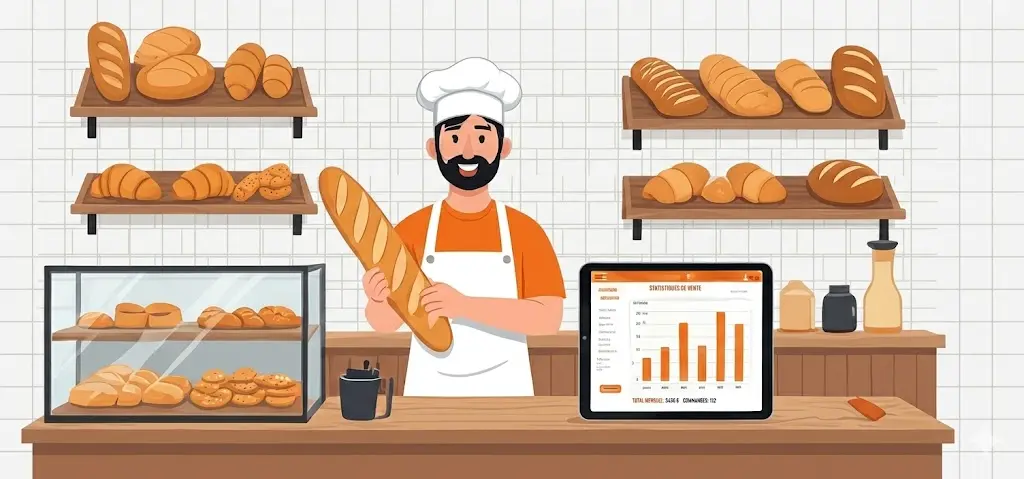
To succeed with seasonal production planning in your bakery, three levers are essential: using historical sales data to anticipate demand variations, adapting your product range to each season's expectations, and adjusting supplier orders accordingly. A baker who masters all three reduces unsold stock by 20-35% and increases revenue by 8-15% during peak periods.
Artisan baking is a deeply seasonal trade. According to the CNBPF (French National Bakery-Pastry Confederation), revenue variations between the strongest months (December, April) and the quietest (August, January) can reach 30-40% for a neighbourhood bakery. Yet most of France's 33,000 artisan bakers still produce to a near-identical schedule month after month, adjusting quantities by feel rather than data.
This mismatch between supply and seasonal demand carries a direct cost: overproduction in quiet periods (unsold stock, waste) and underproduction at peak times (lost sales, disappointed customers). ADEME estimates that 14% of artisan food production is wasted — a figure that rises to 18-20% during poorly anticipated seasonal transitions. On annual revenue of €350,000, every point of waste avoided represents €3,500 in recovered margin. The good news: with the right tools and a methodical approach, seasonality becomes a competitive advantage rather than a constraint.
The bakery demand calendar: 4 key periods of the year
The first annual peak occurs at Easter (March-April). Demand for pastries and viennoiseries surges: Easter brioches, colombas, filled croissants, decorated cakes. According to <a href="https://www.circana.com" target="_blank" rel="noopener noreferrer">IRI/Circana</a> panel data, artisan bakery pastry sales increase by 25-40% in the week before Easter compared to a standard week. For the baker, this means ramping up laminated and brioche dough production, ordering extra butter and chocolate 2-3 weeks ahead, and training the team on seasonal recipes. It's also the ideal time to offer regional specialities — products with high added value that customers look forward to every year.
The second peak is the summer period (June-August), which presents a paradox: foot traffic drops in residential neighbourhoods (holiday departures) but surges in tourist areas. Summer demands a range rotation towards fresh, light products: sandwiches, composed salads, multigrain breads, seasonal fruit tarts. <a href="/blog/snacking-bakery-diversification">Snacking offers</a> can represent up to 50% of revenue in tourist-area bakeries. Conversely, neighbourhood bakeries must significantly reduce volumes to avoid unsold stock while maintaining an attractive range for loyal customers who stayed in town.
Back-to-school (September-October) marks a strong return of demand for classic breads and breakfast pastries. Orders for speciality breads (country, rye, wholemeal) increase by 15% at the start of the school year according to the INBP, driven by seasonal health resolutions. This is the time to relaunch nutritional breads and premium ranges.
Finally, the Christmas period (November-December) is the absolute peak. Yule logs, galettes, panettones, gingerbread, festive pastries: revenue can double compared to a standard month. The CNBPF estimates that December alone represents 12-15% of a bakery-pastry's annual revenue, versus 7-8% for an average month. This concentration demands rigorous supply planning (butter, almonds, candied fruits) from October onwards to secure pricing and availability.
Using historical data to anticipate demand
Reliable seasonal planning rests on a simple principle: what sold yesterday predicts what will sell tomorrow — provided you compare the right periods. The classic mistake is basing Monday's production on Friday's sales. Day-to-day variations are considerable in baking: a Saturday generates 40-60% more revenue on average than a Tuesday, according to field data from the Chambre des Métiers et de l'Artisanat. The right method: compare each day with the same day over the previous 4 weeks, and with the same day the previous year for strong seasonal periods.
For recurring seasonal peaks (Easter, Christmas, Mother's Day), annual historical data is essential. How many galettes did you sell the first weekend of January 2025? How many Easter brioches during Holy Week? Without this data, you're producing blind. The INBP recommends building a minimum 2-year sales history by product and by day for a reliable planning foundation. Each additional year refines predictions and reduces the gap between production and actual demand.
Exogenous factors modulate this historical baseline. Weather is the first: a sunny spring weekend can increase traffic by 20% in a bakery with terrace seating or in a pedestrian zone. Local events (markets, neighbourhood festivals, sporting events) create one-off peaks that need anticipating. School holidays fundamentally change the customer profile: in a residential neighbourhood, holiday weeks see average basket size increase (family purchases, brunches) but footfall drop by 15-25%. Integrating these parameters into your planning — even simply with calendar notes — makes the difference between a baker who endures seasonality and one who anticipates it.
In practice, establish a seasonal coefficient per month for each major product family. If your December pastry sales represent 180% of your monthly average, your December pastry coefficient is 1.8. Apply these coefficients to your average production to get a reliable demand estimate. This approach, used in large-scale retail for decades, is perfectly applicable to artisan baking — it simply requires having the data.
Adapting your range and supplier orders to each season
Seasonal range rotation isn't a luxury — it's a direct <a href="/blog/calculate-real-margins">profitability lever</a>. A well-positioned seasonal product (strawberry cake in May, galette in January, Easter brioche in April) generates 2-3 times more sales than an equivalent standard product, often with a higher margin as customers accept a premium price for an expected seasonal item. The INBP observes that bakers who renew at least 20% of their range at each season change increase revenue by 8-12% during those periods.
The key is preparing the transition 3-4 weeks before the season change. In practice: in early March, test your spring recipes (fruit tarts, herb breads, lighter pastries) and order specific ingredients. By mid-March, gradually introduce new items in the display. By late March, remove winter products that no longer sell (gingerbread, takeaway hot chocolate). This progressive transition avoids gaps and lets you gauge each new product's reception before fully integrating it into the production schedule.
Supplier order management is the backbone of seasonal planning. Key ingredients for high-demand periods (AOP butter for galettes, almonds for yule logs, chocolate for Easter) face price and availability pressure. Ordering 4-6 weeks ahead for major peaks secures supply and locks in prices. According to the Fédération des Entreprises de Boulangerie, bakers who anticipate butter orders for galette season save 8-12% on ingredient costs on average compared to last-minute buyers.
Finally, adjust your daily production volumes by product family according to the calculated seasonal coefficient. If your April coefficient for speciality breads is 0.85 (slight dip versus average, as customers shift to Easter pastries), reduce speciality bread production by 15% and reallocate oven capacity to seasonal products. This dynamic resource reallocation (ovens, team, ingredients) is the core of an effective <a href="/blog/reduce-stock-loss">waste reduction strategy</a>.
Key takeaways
Seasonal revenue variations reach 30-40% between strong months (December, April) and quiet ones (August, January) according to the CNBPF. Every point of waste avoided on €350,000 revenue represents €3,500 in recovered margin — a lever that's especially powerful during seasonal transitions.
Reliable planning relies on comparing historical data: same day over the previous 4 weeks for daily operations, same period from the previous year for seasonal peaks. The INBP recommends a minimum 2-year history for actionable predictions.
Well-positioned seasonal products generate 2-3 times more sales than equivalent standard products. Renew at least 20% of your range at each season change, with a progressive 3-4 week transition.
Anticipate supplier orders by 4-6 weeks for major peaks (Easter, Christmas). Bakers who order ahead save 8-12% on key ingredients compared to last-minute purchasing.
A digital tool like Fournil transforms your sales data into an actionable production plan: product-level history, automatic seasonal coefficients, adjustable stock alerts, and performance reports by season. Seasonality becomes a competitive advantage rather than a constraint.
Conclusion
Seasonality in baking isn't a problem to solve — it's an opportunity to seize. Bakers who plan their production, range and supplies around seasonal variations recover 20-35% margin on unsold stock and capture 8-15% additional revenue during peak demand periods.
The approach is progressive and suits any maturity level: start by recording daily sales by major product family (bread, pastries, patisserie, snacking), then build your history over a full annual cycle, calculate your seasonal coefficients, and finally automate tracking with a suitable tool. With <a href="/#features">Fournil</a>, your sales data feeds directly into production planning: history by product and day, stock threshold alerts adjustable by season, and performance reports that identify your most profitable seasonal products. You move from guesswork production to data-driven production — and every season becomes a mastered opportunity rather than a race against the clock.