Bakery snacking: how to diversify your offer and boost average basket size
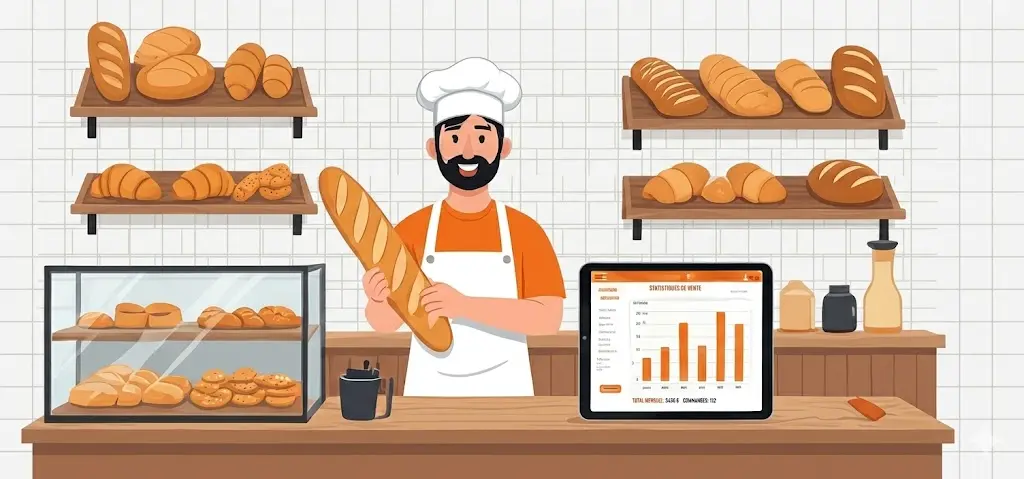
To increase your average basket size in a bakery, one structural trend stands out: snacking. In 2025, 48% of French consumers named bakeries as their preferred snacking destination according to the Strategeat study, and 81% of bakery businesses now offer a savoury range. Average basket value rose from €5.92 to €6.33 in a single year — a 7% increase driven primarily by offer diversification.
This is not a passing trend. For France's 33,000 artisan bakeries (CNBPF), snacking represents a structural growth lever against declining footfall and rising production costs. Some artisans already generate up to 40% of their revenue from their savoury and catering offer. As Philippe Lux, a baker in Angers, puts it: "You can no longer survive selling bread alone."
But diversifying doesn't mean improvising. A profitable snacking offer requires rigorous product selection, precise margin tracking by category, and the right tools to monitor performance. Here's how to turn this opportunity into concrete results for your bakery.
Why snacking has become essential for bakeries
The French artisan bakery market represents between €13 and €16 billion in annual revenue (Miimosa, 2026). But growth no longer comes from bread alone. In 2025, the number of outlets is declining slightly while overall revenue grows by about 2% — a paradox explained by rising average basket values, driven by snacking and premium products.
Bakeries enjoy a unique competitive advantage over fast food: consumer trust in homemade products and quality ingredients. According to <a href="https://www.strategeat.com/" target="_blank" rel="noopener noreferrer">Strategeat</a>, 48% of French people prefer buying their snack at a bakery rather than a fast-food chain or supermarket. This preference rests on the perception of a fresh, artisan, local product — exactly the positioning that industrial chains struggle to replicate.
The rise of bakery snacking follows an inescapable economic logic. With rising production costs (energy, flour, butter), maintaining margins on bread alone is increasingly difficult. The <a href="/blog/calculate-real-margins">cost of ingredients for bread</a> represents 25-35% of revenue, leaving little room for manoeuvre. By comparison, a well-structured snacking offer can achieve gross margins of 60-70% on certain products (sandwiches, composed salads), provided costs are controlled and unsold stock is minimised.
Finally, snacking generates additional footfall during the 11am-2pm window, which is traditionally quiet for pure bakeries. This extra flow mechanically increases revenue without requiring property investment — it simply means optimising existing space and adapting the display.
How to build a profitable snacking offer
The first rule is to keep a short, rotating menu. Successful bakeries offer 5 to 8 savoury items maximum, refreshed weekly based on seasonality and demand. A menu that's too broad generates waste, complicates production and dilutes margins. It's better to sell 6 products at a 95% rate than 15 products where a third ends up in the bin.
Product selection should be based on three criteria: ease of preparation, coherence with baking expertise, and margin rate. Sandwiches on house-baked bread, quiches, pizza by the slice and focaccias are high-margin classics that directly add value to your core production. Prepared dishes (gratins, lasagnes, tartiflettes) represent the next step for ambitious artisans, but require investment in equipment (dedicated oven, extraction hood) and skills.
Seasonality is an underused lever. In summer, composed salads and cold wraps dominate. In winter, soups, croque-monsieurs and hot dishes take over. Integrating this rotation into your production planning lets you anticipate supplier orders and <a href="/blog/reduce-stock-loss">significantly reduce stock losses</a>. The INBP recommends using 4 weeks of sales history to adjust quantities — advice that applies equally to snacking and bread.
Local sourcing strengthens your positioning. Consumers who choose a bakery for lunch are seeking authenticity and traceability. Working with local market gardeners for your salads or a regional charcutier for your sandwiches creates a brand story that justifies premium pricing and builds loyalty. It's also an effective communication tool on social media and in your shop window.
Track your snacking profitability with the right tools
Diversifying your offer without tracking margins is flying blind. Snacking involves multiple product lines (bread, pastries, savoury, drinks) with very different cost structures. A €5.50 sandwich can deliver 65% gross margin or just 35%, depending on ingredient sourcing and preparation time. Without category-level tracking, you don't know which products make money and which lose it.
Tracking ingredient cost by product line is the first metric to implement. For each snacking item, calculate the ratio between ingredient cost and selling price (inc. VAT). A good target: keep ingredient cost below 35% for savoury items and below 30% for drinks. If a product exceeds these thresholds, you need to either renegotiate with the supplier, <a href="/blog/pricing-mistakes">adjust the selling price</a>, or remove it from the menu.
A <a href="/#features">management tool like Fournil</a> automates this tracking in real time. Every sale recorded at the till automatically decrements ingredients according to your recipes and calculates gross margin by product and category. Weekly reports instantly show which sandwiches are your best contributors and which salads linger at the end of the day. This visibility enables informed decisions: adjust production quantities, modify the menu, optimise prices.
Finally, cross-referencing sales data with stock data reveals invisible waste. A gap between ordered ingredients and completed sales signals either overproduction or preparation losses. By identifying these gaps week after week, you refine your production and maximise net margin — the true measure of profitability. On annual snacking revenue of €100,000, gaining 5 points of net margin represents €5,000 in additional profit — often three times the annual cost of your management tool.
Key takeaways
48% of French consumers name bakeries as their preferred snacking spot (Strategeat, 2025). Average basket value rose 7% in one year thanks to savoury offer diversification — an accessible growth lever for all artisans.
A short snacking menu (5-8 items) with weekly rotation maximises sales while limiting waste. Prioritise products that add value to your core production: sandwiches on house bread, quiches, pizza by the slice, focaccias.
The target ingredient cost for savoury snacking is 35% maximum of selling price inc. VAT. Beyond this, renegotiate sourcing, adjust pricing, or remove the product.
Snacking generates footfall during 11am-2pm, traditionally a quiet period for bakeries. This additional flow increases revenue without major property investment.
Margin tracking by category (bread vs pastries vs savoury vs drinks) is essential as soon as you diversify. A digital tool like Fournil automates this tracking and turns data into concrete decisions: quantity adjustments, price optimisation, waste reduction.
Conclusion
Snacking is no longer optional for artisan bakeries — it's a profitability pillar. With 48% of consumers preferring to buy their snack from their baker and average basket size up 7% year-on-year, artisans who structure their savoury offer are pulling ahead.
The key to success: a short, seasonal menu, high-margin products aligned with your expertise, and rigorous cost tracking by category. Without the right tools, diversification can become a trap of complexity and waste. With Fournil, you track margins by product in real time, anticipate stock needs, and immediately identify which items contribute — or don't — to your profitability.
The approach is progressive: start with 3-4 high-rotation savoury items (sandwiches, quiches), measure your margins for a month, then adjust and expand. Each step relies on concrete data rather than intuition.